
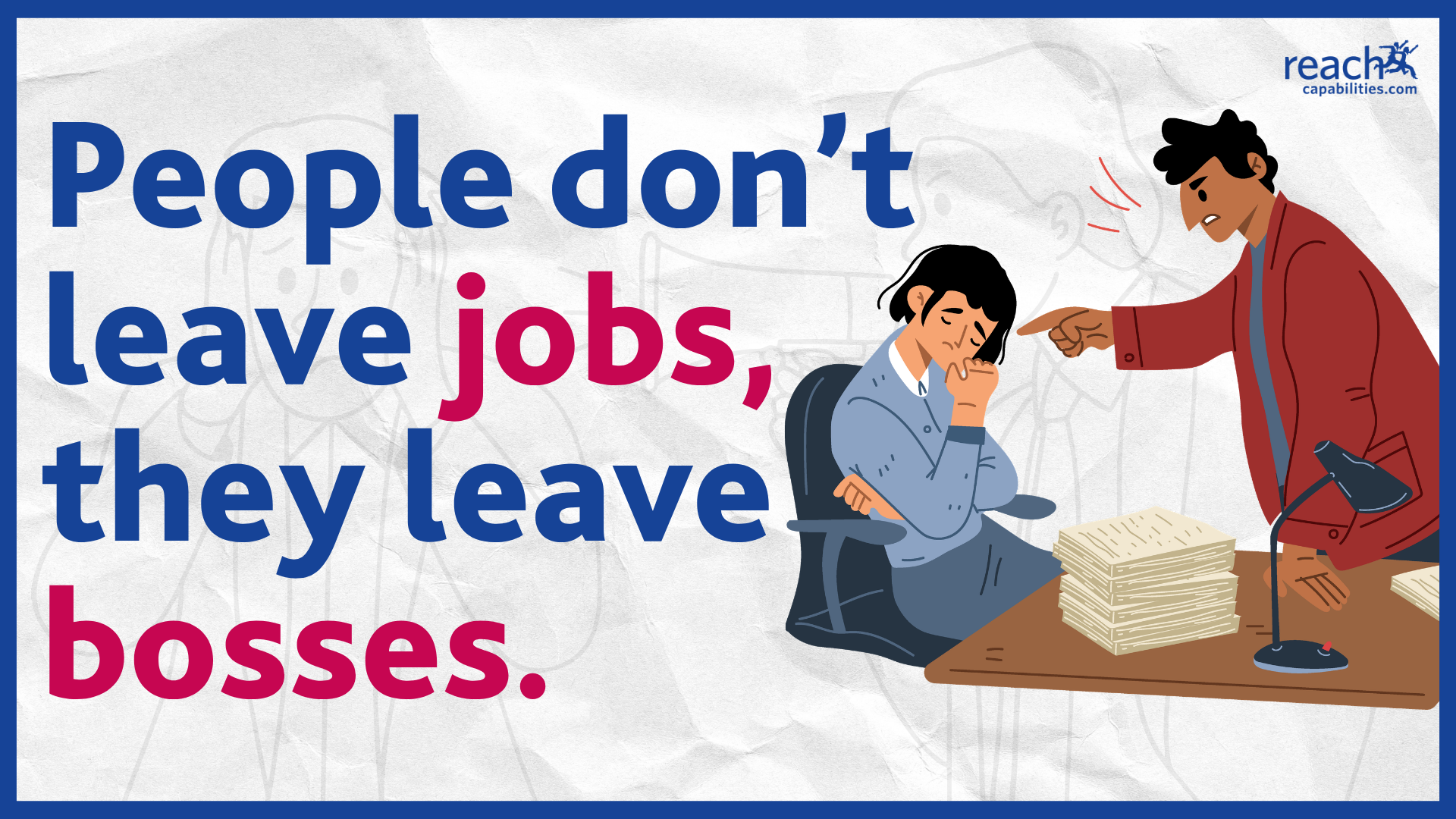
You’ve probably heard the expression, “People don’t leave jobs, they leave bosses.” It’s one of those statements that sounds almost too simple. After all, people leave for better salaries, shorter commutes, bigger opportunities, more flexibility, or because they simply want a change. But think about the best job you’ve ever had. Was it really just the job that made it great?
More often than not, the answer is the people. The colleagues who made you laugh. The team that had your back. And perhaps most importantly, the leader who made you feel trusted, valued, and capable of doing your best work.
Now think about the opposite. A job can have a great salary, excellent benefits, and an impressive title. But if every Monday morning brings a knot in your stomach because you have to work with a terrible boss, how long will those other benefits really keep you there? A great job with a difficult boss can quickly become a difficult job.
Employee engagement is talked about as though it is something organizations create through programs, benefits, and perks. Those things do matter. But engagement is also built, or eroded, in the everyday interactions between a leader and their team.
How does the leader communicate? Do they listen? Do people feel trusted, respected, and valued? Can they make a mistake without being embarrassed or blamed? Do they understand what is expected of them? And perhaps most importantly, do they feel their leader genuinely wants them to succeed?
Leadership is not about having all the answers. It is about creating the conditions in which other people can do their best work. That sounds straightforward, but it is not easy. Leaders are human too. We have our own pressures, tendencies, and blind spots. Under stress, even good leaders can become impatient, remote, or controlling. And the behaviours that feel perfectly reasonable to us may be experienced very differently by the people around us.
This is where self-awareness becomes so important. A leader may think, “I’m giving them autonomy,” while their team member is thinking, “My boss doesn’t provide enough direction.” A leader may think, “I’m holding people accountable,” while their team member is thinking, “I’m being micromanaged.” Same leader. Same behaviour. Very different experience.
So, what can we do?
The answer isn’t to become the perfect boss. There is no such thing. It is to become a more self-aware and adaptable. By understanding our own style, recognizing how it can affect others, and be willing to adjust when our intentions and our impact don’t match. Leadership is ultimately experienced by the people being led.
When people leave, it is tempting to focus on salary, workload, career opportunities, or the competition. Those can absolutely be the reasons. However, sometimes the real issue is much closer to home. People rarely quit because of one bad meeting, one difficult conversation, or one frustrating day. They leave when a pattern develops—a pattern where they no longer feel heard, supported, or valued.
The most important question to consider: What kind of pattern are you creating for the people you lead?
If you asked your team what it feels like to work for you, what would they say? Would their experience match the way you believe you lead? Do they feel trusted, or watched? Challenged, or criticized? Supported, or simply managed? Do they know that you want them to succeed, and, more importantly, do your everyday actions make them feel that way? These questions are uncomfortable, but they are crucially worth asking.
The opposite is also true. A great leader can make a challenging job feel worthwhile. They can build confidence, create loyalty, and encourage more growth than someone thought possible. The most powerful thing a leader can give someone isn’t a promotion, a perk, or even a pay increase. It is the feeling that “I can do great work here, and the person leading me believes in me.”
That is the real responsibility of leadership.
Before we look at the stand reasons for why someone left; spend more time thinking about why someone stayed. Was it the company? The job? The salary? Or was it the person who made them feel respected, trusted, and capable? Because people may work for a company, but they experience it one leader at a time.