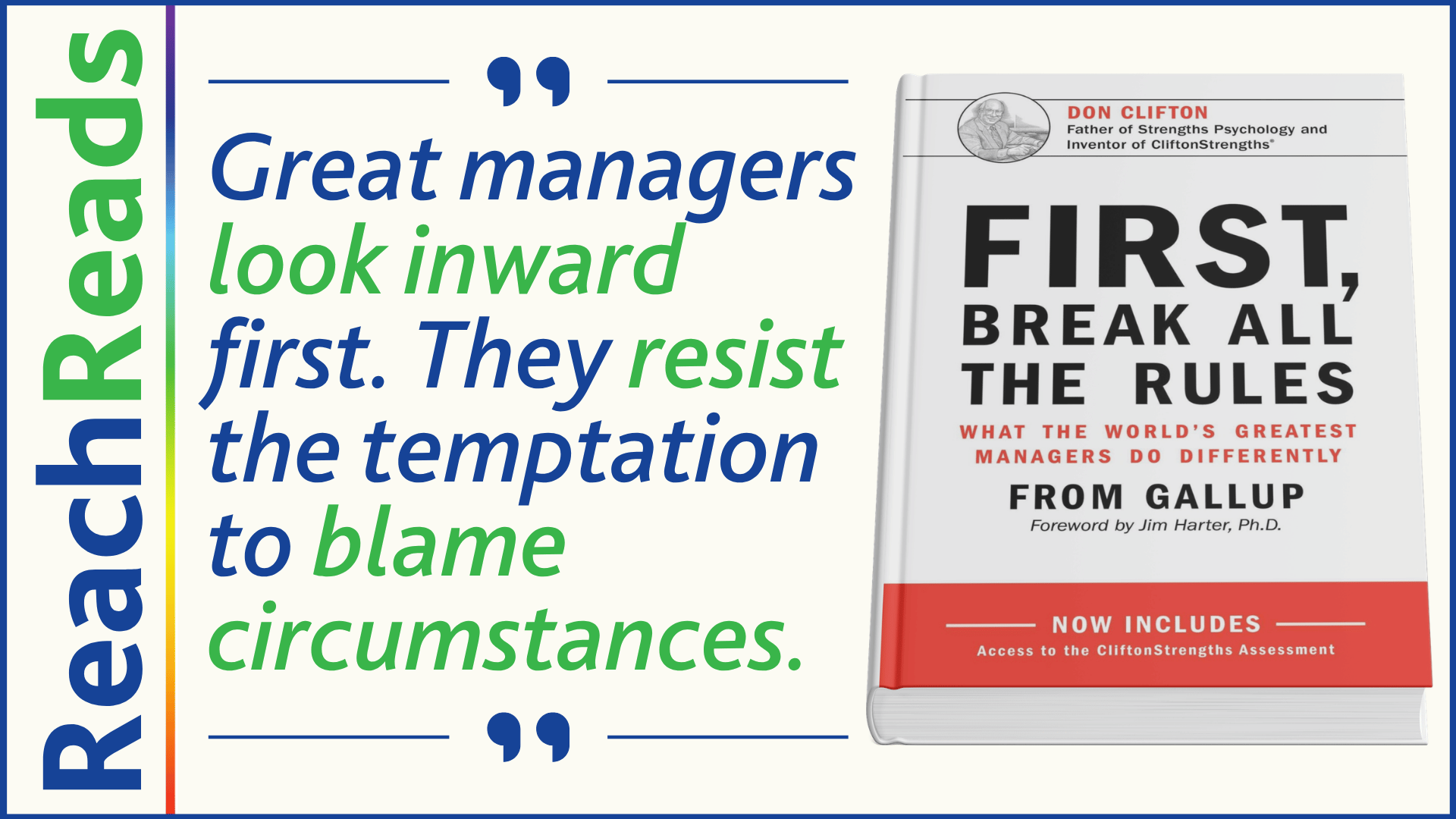
In First, Break All the Rules, Marcus Buckingham and Curt Coffman challenged many of the key tenets of accepted management practices and overturned decades of assumptions about what makes a great people manager. The Gallup Organization interviewed over 80,000 managers and more than one million team members to answer the question “what do great managers do?” The short answer: they consistently “break the rules” so their people can do their best work based on their individual unique strengths.
Conventional management wisdom which is put into standard rules for most organizations, treats each employee as standard. Everyone follows the same rules and receives the same rewards. This makes it “fair” for all employees. But it also puts each person into the same box like they are interchangeable (and replaceable) cogs in a machine. Yet, we expect great and similar performance from very different people.
But people are fundamentally different and great managers learn to embrace those differences rather than trying to eliminate what makes their people special. Buckingham and Coffman provide clear research of the benefits of identifying each employee’s natural talents. Then creating opportunities for those strengths to flourish. Skills and knowledge can be taught. Talent is far more enduring.
There are four key practices of great people leaders: select for talent, define the right outcomes, focus on strengths, and find the right fit.
Select for Talent: Great managers hire for talent rather than simply experience or technical skills. They recognize that natural patterns of thinking, feeling, and behaving are far more difficult to develop than knowledge, which can be learned over time.
Define the Right Outcomes: Rather than prescribing every step of the process, exceptional managers communicate clear expectations and desired results, then trust people to achieve those outcomes in their own way. Freedom, when paired with accountability, creates ownership.
Focus on Strengths: Instead of spending most of their time fixing weaknesses, great managers invest in developing what people naturally do best. Weaknesses should be mitigated, but extraordinary performance comes from amplifying strengths—not creating well-rounded employees.
Find the Right Fit: Career success is not synonymous with climbing the management ladder. Great leaders recognize that people create the greatest value when their roles align with their talents, whether that means leading others or becoming world-class experts in their field.
One of the most important insights is: people don’t leave companies; they leave managers. The relationship between an employee and their direct manager has huge impact on engagement, performance, and retention. Leadership, is less about policies and procedures, and more about creating an environment where people can do what they do best every day.
Their recommendations are particularly compelling because they are grounded in evidence. Rather than relying on theory, anecdote, or general practice, decades of research are distilled into practical principles. Many ideas from this book are now considered leadership best practices, including strengths-based leadership and the importance of employee engagement.
Regardless of the size of your team, First, Break All the Rules proves that great managers don’t create high performance by treating everyone the same. They unlock it by recognizing what makes each person different. After nearly three decades, the message is still clear: stop trying to fix people, and start helping them become exceptional at what they naturally do best.