
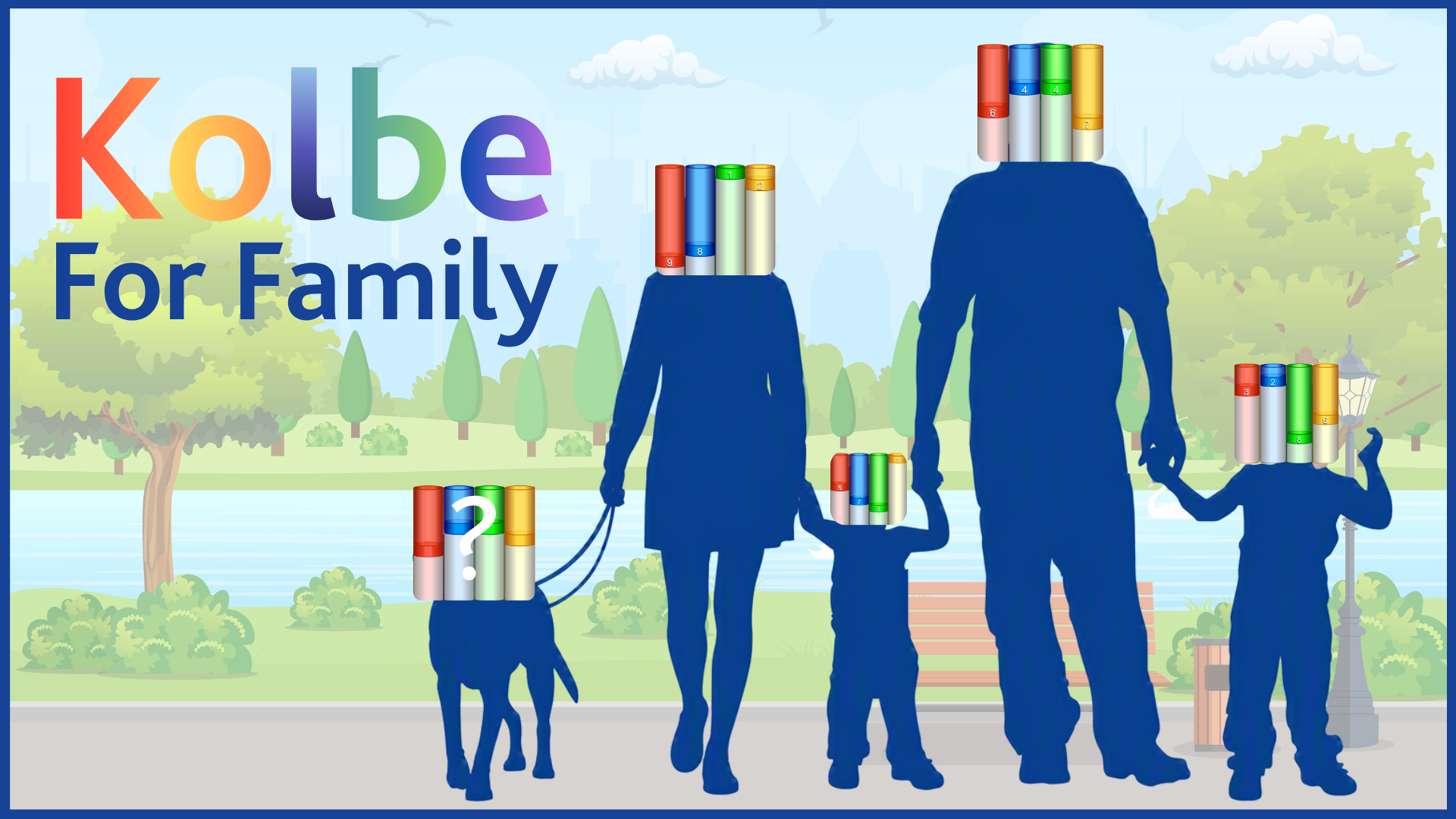
Why does one kid tidy their room without being asked, while another needs far too many reminders? Why does one partner push the order now button on Amazon from the first link, while the other looks at multiple reviews before deciding? And let’s not even talk about the “right” way to load the dishwasher!
Too often, these differences are mistaken for stubbornness, laziness, or a lack of cooperation. What if they’re simply different ways of taking action? That’s what Kolbe A Index puts in the spotlight. Rather than measuring intelligence or personality, Kolbe identifies our conative energy — the natural way we tackle tasks, solve problems, and get things done.
These instincts aren’t learned, and they’re not right or wrong. They’re simply part of how each of us is wired. Understanding these differences can be transformative for relationships.
When families begin to see behaviour through the Kolbe lens, many common frustrations start to shift. What once looked like resistance, may actually be a need for clarity. What felt like impatience may simply be a drive to act quickly. What seemed like overthinking may be a natural desire to gather information before moving forward. A small shift in our perception with the Kolbe language can reduce conflict and create more patience, empathy, and understanding.
Parents often discover that what looked like resistance is actually a child’s instinctive way of working. Partners realize that rather than competing in everyday life, they’re bringing complementary strengths. Siblings begin to appreciate that different doesn’t mean difficult.
Kolbe isn’t about changing family members to be the same. Instead, it provides a common language for understanding one another. And when people feel understood, they are more likely to feel respected, supported, and valued.
In the end, families are strongest not because everyone is the same. They are strongest because each person is different – and those differences are not judged, but understood.