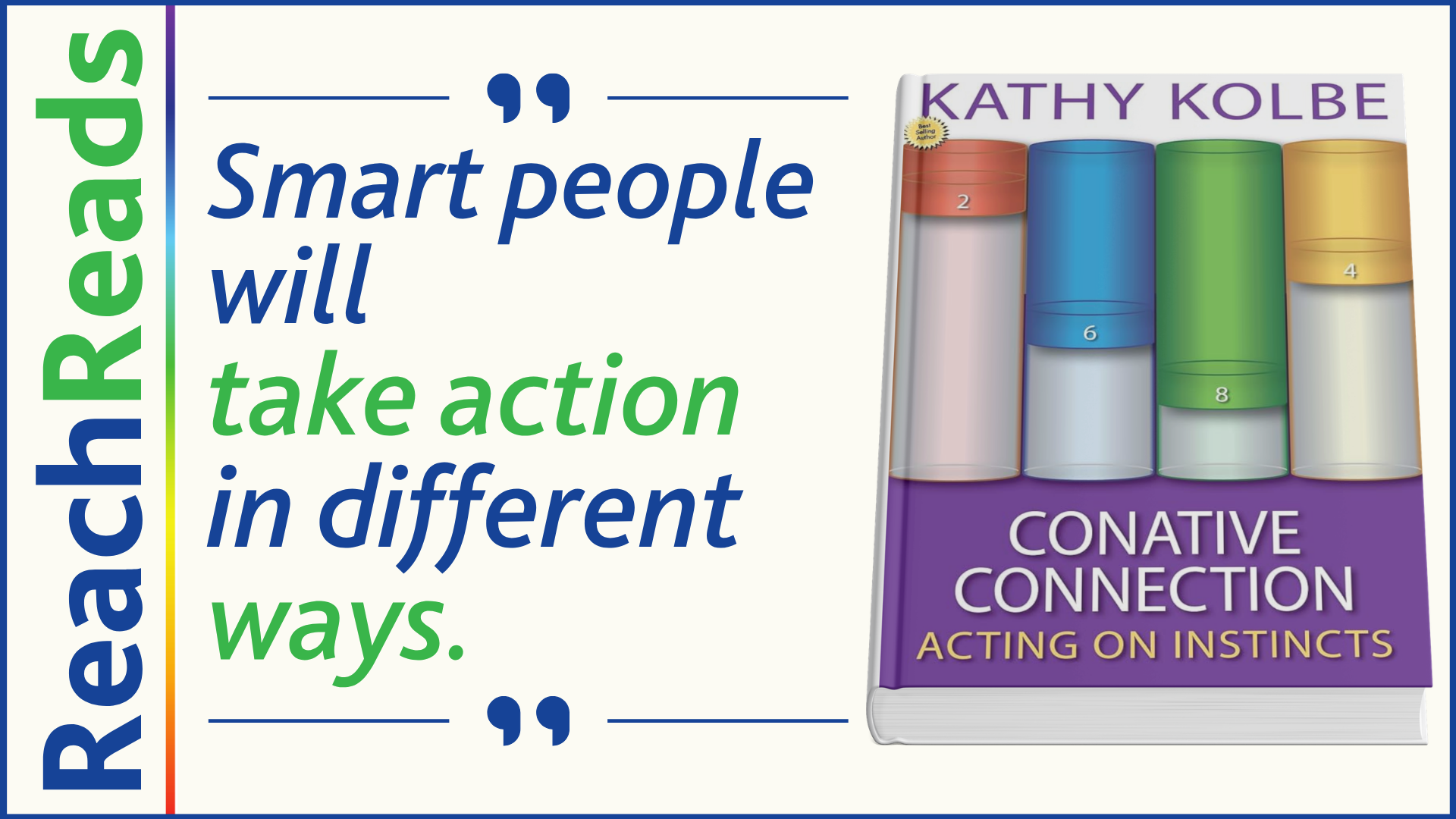
In The Conative Connection, Kathy Kolbe explains the least-known dimension of human performance: conation. This is the instinctive way we take action to get things done. While most leadership and development theories focus on how we think (cognitive) or how we feel (affective), Kolbe explains how our natural method of problem-solving plays a crucial role in individual and team success. Through practical examples and decades of research, she proves a compelling case for understanding and leveraging these instinctive strengths.
At its core, The Conative Connection challenges the idea that peak performance comes from changing people. Instead, Kolbe suggests that many workplace frustrations, communication breakdowns, and leadership challenges stem from expecting everyone to approach work the same way. By recognizing and respecting instinctive differences, leaders can unlock stronger collaboration, higher productivity, and more engaged teams.
Kathy Kolbe categorizes conative strengths into four Action Modes: Fact Finder, Follow Thru, Quick Start, and Implementor. All are about how we approach solving problems.
Fact Finder: how someone instinctively gathers and analyzes information. At one end of the continuum, some research thoroughly before moving forward. At the other end, some naturally simplify to key points. In the middle, people can flex between either approach as needed.
Follow Thru: how people use structure, classification, and systems. Some need to organize processes and create consistency. Others are highly adaptive and achieve their results through an iterative approach. The middle majority, maintain existing systems to keep the flywheel moving in the same direction.
Quick Start: how we handle risk and uncertainty. Some of us thrive on innovation, experimentation, and taking calculated risks. Others stabilize situations to provide guaranteed outcomes. And a third group are able to modify some times and less so other times.
Implementor: the need for tangible solutions. The long end of the continuum literally creates concrete solutions in physical form. The short end of the continuum creates conceptual results. Those in the middle are able to flex between both options as needed.
Kolbe’s central message is that these Action Modes are neither intelligence nor personality traits. They are natural, instinctive mental energy. Conflicts can arise, not because people are incapable, but because they expect others to approach challenges the same way they do. When teams understand these differences, they can assign work more effectively, improve communication, and reduce unnecessary friction.
While many leadership frameworks encourage people to strengthen weaknesses or adapt their behaviour, Kolbe argues that sustainable performance comes from working with, not against, our natural instincts. This is a significant shift in approach that encourages leaders to build teams around complementary strengths rather than uniform one-size-fits-all approaches.
Whether you’re leading a team, managing projects, or simply looking to better understand how people work, The Conative Connection offers a practical perspective to improve collaboration and performance. It’s not just what people can do, but how they naturally do it.